

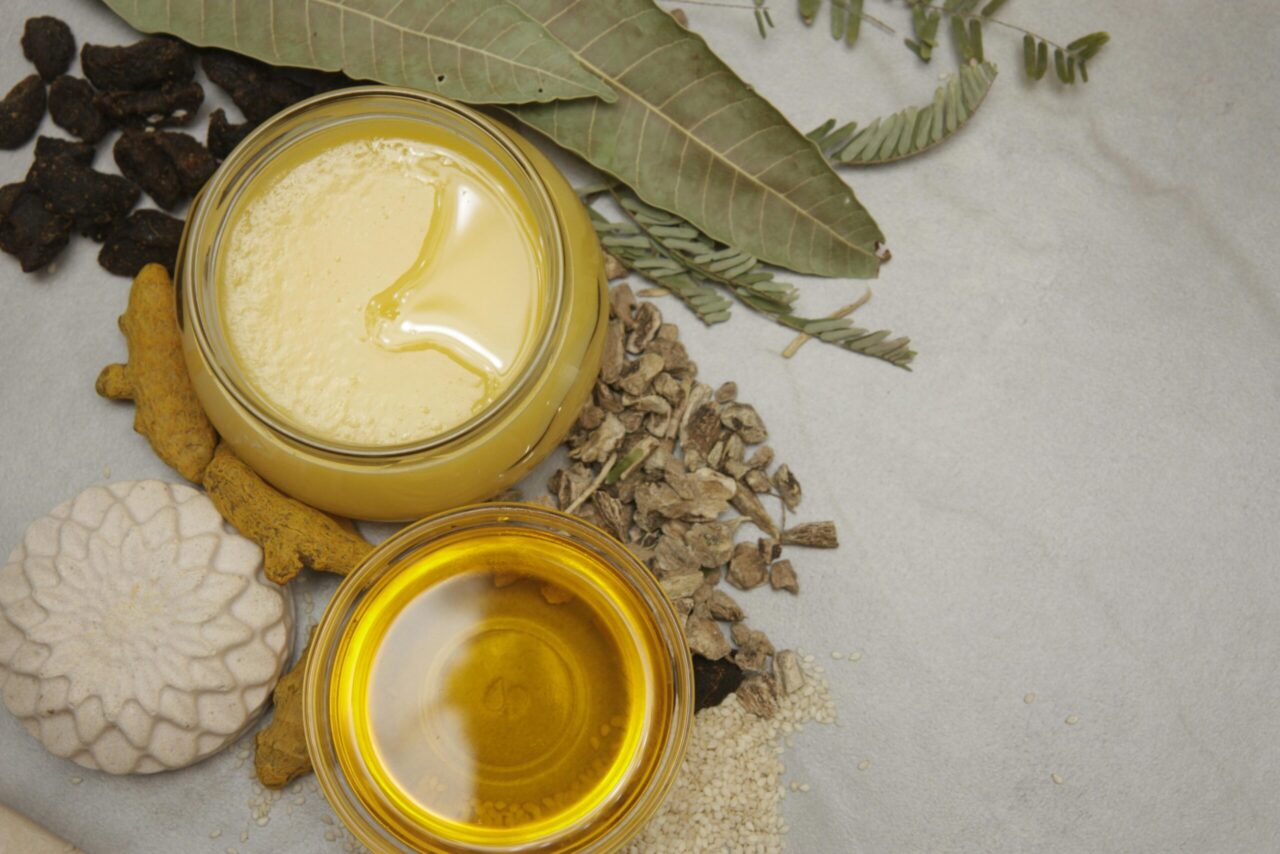
02 Nov Ghee in Ayurveda
Ghee in Ayurveda – The Ancient Superfood for Body, Mind & Spirit
In the growing world of superfoods and wellness trends, ghee stands out—not just as a cooking fat, but as a time-tested healing substance. In Ayurveda, the traditional medicine system of India, ghee is considered a sacred elixir—a golden essence that nourishes your body, sharpens your mind, and supports deep emotional balance.
If you’re into holistic health, yoga, or simply mindful living, here’s why adding ghee to your daily routine could be a transformative practice.
What Is Ghee in Ayurveda?
In Sanskrit, ghee is called “ghrita”, and it’s more than just clarified butter. Ghee is revered in Ayurveda as:
- A carrier of herbal medicine
- A brain and nerve tonic
- A builder of Ojas—your subtle life energy, immunity, and vitality
Unlike other oils, ghee is sattvic—which means it promotes clarity, peace, compassion, and spiritual growth. Ayurveda teaches that what we eat affects not only the body, but also the mind and consciousness.
Ghee & Digestion: Fuelling Your Agni
In Ayurveda, your Agni (digestive fire) is the cornerstone of health. When Agni is strong, you digest food, absorb nutrients, and eliminate toxins effectively.
Ghee is one of the best fats to:
- Kindle Agni without being heavy or inflammatory
- Improve nutrient absorption
- Support gut health without aggravating bloating or acidity
Unlike processed oils, ghee doesn’t produce toxins when heated, making it ideal for cooking and sautéing.
Ghee & the Doshas: Balancing Vata, Pitta, and Kapha
Ayurveda classifies our physical and mental makeup into three doshas—Vata, Pitta, and Kapha. Ghee is one of the few substances that can balance all three, especially when used correctly.
- Vata (Air + Ether): Ghee calms dryness, anxiety, and restlessness
- Pitta (Fire + Water): Ghee cools the body, soothes inflammation and tempers anger
- Kapha (Earth + Water): Used in moderation, ghee improves digestion and avoids sluggishness
Ayurvedic Properties of Ghee: Rasa, Virya & Vipaka
In classical Ayurvedic texts, every substance is evaluated through six key attributes, with Rasa, Virya, and Vipaka being primary in determining its therapeutic effects.
Let’s break down ghee’s properties:
Property:
Taste (Rasa): Madhura (Sweet) – Ghee has a naturally sweet taste which is nourishing, grounding, and promotes tissue building (brimhana). It soothes both body and mind.
Potency (Virya): Shita (Cooling) – Although it’s an oily substance, ghee has a cooling energy, which helps pacify excess Pitta dosha, soothe inflammation, and support liver health.
Post-Digestive Effect (Vipaka): Madhura (Sweet) – The sweet post-digestive effect further supports tissue nourishment, strengthens Ojas, and aids in elimination.
These properties make ghee tridoshic—able to balance Vata, Pitta, and Kapha when used appropriately.
What This Means in Practice
- Sweet rasa + vipaka = Builds strength, enhances fertility, supports immunity
- Cooling virya = Reduces internal heat, soothes skin and digestion
- Unctuous (snigdha) and softening = Great for dryness, stiffness, and nerve-related imbalances
This combination of properties makes ghee especially beneficial during stress, fatigue, seasonal transitions, and times of depletion or dryness, both physically and emotionally.
Ghee for Brain & Emotional Health
In the age of burnout, overthinking, and constant mental noise, ghee offers ancient support for the nervous system and emotional wellness.
- Acts as a medhya rasayana (brain tonic)
- Builds Ojas, your subtle immunity and resilience
- Enhances memory, clarity, and mood
Used in Ayurvedic therapies like nasya (nose oiling) and basti (herbal enemas)
Many practitioners recommend a spoonful of ghee with warm milk and turmeric before bed to calm the mind and support restful sleep.
Easy Ways to Use Ghee Daily
Incorporating ghee into your wellness routine is simple:
Cook your veggies or spices in it (especially cumin, turmeric, ginger)
Add a teaspoon to your morning oats
Swirl it into soups or lentils for richness and digestibility
Apply to dry skin or lips as a natural moisturiser
Tip: Always choose organic, grass-fed ghee—or make your own using traditional Ayurvedic methods.
Final Thoughts: Ghee as Ritual, Not Just Nutrition
Ghee isn’t just a dietary fat—it’s a sacred ritual, a healing ally, and a bridge between physical nourishment and spiritual upliftment. Whether you follow Ayurveda closely or are simply curious about ancient wellness practices, ghee offers a gentle but powerful way to reconnect with balance. So next time you prepare a meal, light a candle, or settle down with a cup of golden milk, remember: Ghee is nourishment—not just for your body, but for your entire being.
Sorry, the comment form is closed at this time.